


A very well built item and came well packaged with accessories like spare wick, lanyard and storage bag. Good detailed instructions inside packing tube. A little bit of experimenting for ideal flame length for lantern easily achieved.
 Contact Us
Shipping Info
Contact Us
Shipping Info
 Gift Cards
 Track My Order
 My Account
 Cart
Cart
Your cart is empty


 United Kingdom · GBP

01 / 03
Throughout the design process, lots of design features were added to ensure full compatibility with the lanterns.
We designed the oil insert to be as large as possible to hold more fuel, while still allowing the lantern to close fully with the insert inside, making it easy to transport both items together.
Although the spring isn't necessary for the oil inserts, they still fit inside with it—helping keep everything together and reducing the chance of misplacing the spring.
Trimming the wick lets you adjust the flame size. We made sure the wick extends far enough to do this even when the oil insert is inside the lantern.
Like the UCO lanterns, we wanted to ensure the Oil Inserts remained lightweight and portable. The inserts are CNC machined from aluminium and have thin walls to reduce weight without compromising strength.

02 / 03
When designing the inserts, we focused on keeping wick changes and refills quick and straightforward. Our goal was to make sure that these tasks could be done outdoors, hassle-free, and without needing any special tools.
We made replacing the wicks easier by adding a second screw for threading them. Early prototypes showed that feeding the wick straight into the lid was tricky—trying to grip and guide it from the backside (especially outdoors) just didn't work.
For refilling, the lid removes completely, leaving a large opening to pour fuel into. The large opening helps reduce the chance of any accidental spills.
During design, we aimed to make the oil chamber as large as possible to increase burn time. It holds 25ml of fuel, providing roughly four hours of use. (Note: flame size will affect this.)

03 / 03
Every closure on the inserts uses corrosion-resistant O-rings. These are hidden when the insert is closed to keep the design clean, while still ensuring fuel stays sealed securely during transport.
We opted for matte black on the first batch of the inserts (more colours are planned for later). Each insert also comes with a bright orange reflective elastic toggle, so they're easy to spot if dropped. The toggle also lets you secure the lid to the lantern while in use, so it doesn't go missing.
Being able to adjust the flame size is a key advantage of the inserts. We chose high-density 100% cotton wicks for their slow burn rate—even with a large flame, they hold up well. At a typical flame height, the wick will burn through just 2–8mm over four hours.
 WATCH: New FF Oil Inserts for the UCO Original Lanterns – No More Expensive Candles!
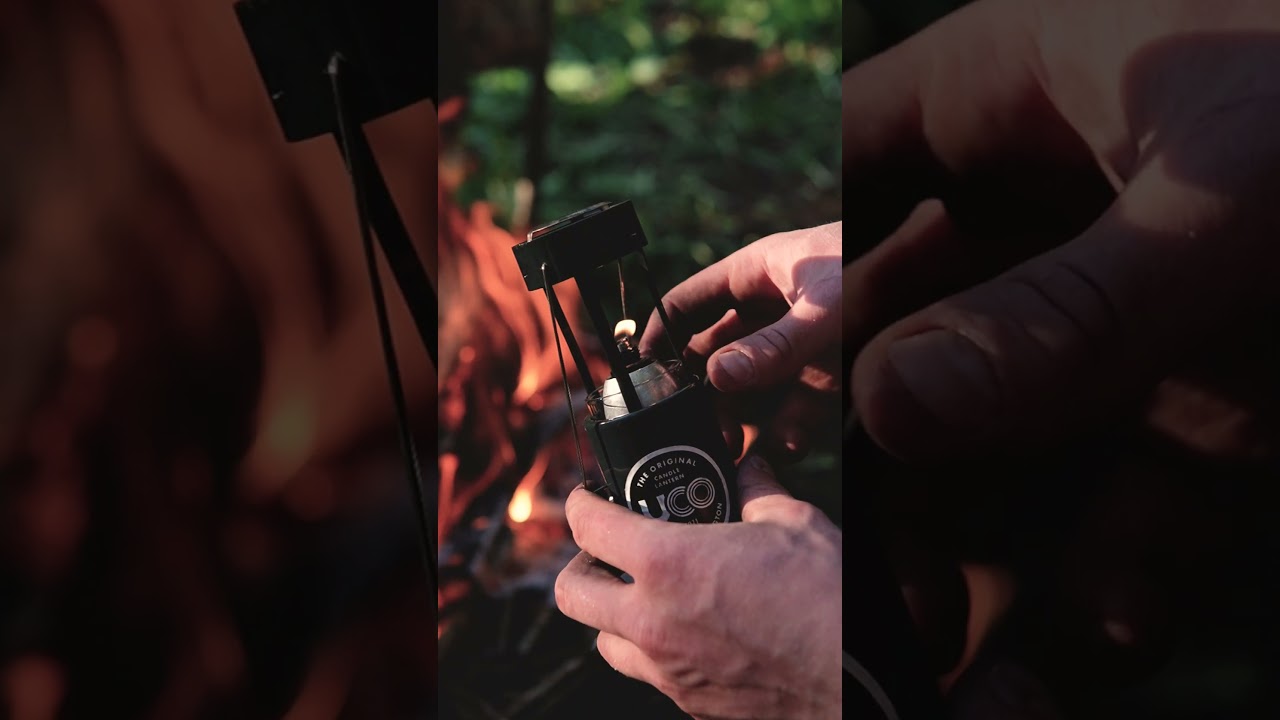 Setting Up the FF Inserts Ready for a Night in the Woods

Stage 01 · The Design Process: Why We Chose To Design Our Own Inserts
At Forest Fundamentals, we are long-time UCO lantern users. Over the years, with the help of a few YouTube videos, we experimented with making several different oil inserts from old aerosol cans and metal tubing.
Although these inserts worked well, one of the biggest challenges with the DIY versions was achieving a watertight seal and dealing with issues when replacing the wicks.
Eventually, we set out to solve these design flaws and upgrade DIY oil inserts by designing something fully compatible with the lanterns.

Stage 02 · The CAD And 3D Printing Prototyping Phase
From the start, we knew the inserts had to fit inside the metal candle casing of the UCO Original Lanterns. This gave us a solid guide to fine-tune the perfect size.
However, the slight angle at the top of the candle holder made things a bit tricky. We 3D printed multiple prototypes, tweaking the angle each time until we achieved the perfect fit.
With the 3D printed samples, we were also working to perfect the size of the inserts. Testing showed that the lanterns needed to hold around 25 ml of fuel for at least four hours of burn time. The challenge was making the oil chamber large enough while still allowing the lantern lid to close fully with the insert inside.
In the end, we shortened the lid and cap height while ensuring there was still enough material to grip. We wanted to keep the design practical without making the components too small or difficult to use.
As a company with some experience in CNC machining, we thought this would be a fairly straightforward process. Half a year and countless prototypes later, they're finally on the shelves!

Stage 03 · The CNC Machining Prototyping Phase
Once we had the overall size figured out, we focused on fine-tuning the individual components.
Originally, the wicks were threaded directly into the top of the lids. However, because they needed a tight fit to prevent leaks, the process was very fiddly.
In the end, we designed a separate screw for the wick to thread onto, which then screwed into the lid. This made changing the wicks much easier and more practical.
Along the way, we also increased the length of the screw to ensure it could be threaded from both sides of the lid.
Ensuring the oil inserts were completely watertight was a challenge. The industry-standard O-ring sizes never quite fit the design, so it took a lot of back-and-forth testing before we finally found the right sizes that worked.

Stage 04 · The Wick Testing & Development Phase
Arguably, the most time-consuming part of the process was developing the wicks!
We had two key goals: ensuring a slow burn rate and maintaining a steady fuel flow for a consistent flame.
We worked with manufacturers to create countless samples, experimenting with different widths and blends of cotton, fibreglass, and nylon to find the perfect balance.
We tested each wick for total burn time, fuel flow, and light output until we eventually settled on a high-density cotton wick.
Each wick typically burned for around 3–5 hours. A lot of the testing involved letting them burn in front of the TV in the evening while we took notes on the results!
Below, we've created a slightly nerdy but useful graph to show the total savings of using oil inserts compared to UCO candles. The insert line starts at £26.95 to account for the one-time cost of the insert itself. You can also enter the prices you pay for candles and paraffin to generate a more personalised comparison. This calculation is based on 25 ml of fuel providing 3.5 hours of burn time.
Yes, the inserts are designed for full compatibility with UCO Original Lanterns (this model only). The lantern lid will close completely with the insert and spring inside.
The rate of fuel consumption depends largely on the flame size. With a standard flame (using 2mm or less of wick), 25ml of fuel provides approximately 4 hours of burn time. A larger flame will increase fuel consumption, reducing overall burn time.
Yes, the inserts are designed to be completely watertight. After securing the lids, there may be slight leakage initially due to excess fuel being compressed out of the O-rings. Once wiped away, no further leakage will occur. To prevent leaks, ensure the caps are tightly secured.
The oil inserts are compatible with kerosene, scented lamp oils, and paraffin oil. However, we recommend using only lamp oil or paraffin oil, as they are less flammable than kerosene and provide a more stable flame. We have included a link in the instructions to the most affordable paraffin we could find on Amazon.
The total burn time depends on the flame size. With a standard flame (using 2mm or less of wick), 25ml of fuel (a full insert) provides up to 4 hours of burn time. A larger flame will consume fuel more quickly, reducing total burn time.
With 2mm of wick exposed (to produce the standard flame size), you can expect around 4 hours of burn time. Since the wick burns slowly, replacements are rarely needed. However, if the wick becomes too short, it will not reach the bottom of the container, preventing the remaining fuel from being drawn up and used.
We recommend using a 10–15cm wick and replacing it every 5–10 uses.
Yes. One of the key advantages of oil inserts over standard candles is the ability to adjust the flame size. This can be done by pulling the wick through slightly to expose more wick, which increases the flame size.
The lanterns function well with a larger flame, although this may cause increased soot buildup, which can be easily wiped away after use. The soot does not damage the lanterns.
Yes, after prolonged use or when using a larger flame, soot will begin to accumulate—mainly on the metal top of the lantern and around the glass. While it can be a bit messy to clean, it does not damage the lantern and can be easily wiped off after use.
Using 2mm or less of wick to produce the standard flame size results in significantly brighter illumination compared to candles. Oil burns more efficiently, producing a stronger light while also being more resistant to wind.
Additionally, the adjustable wick allows for greater control over flame size and light output.
The oil inserts are covered by a 10-year warranty that guarantees protection against defects in workmanship and materials. If you encounter any issues with the inserts, feel free to reach out to us—we're happy to help.
Please note that the warranty does not cover damage resulting from misuse, neglect, or improper handling.
Yes, full instructions and how-to videos are included. We can also provide PDF instructions in different languages upon request.
No, this is not a UCO brand or affiliated product. It is designed by Forest Fundamentals to be fully compatible with UCO Original Lanterns, but it is not manufactured or endorsed by UCO.
This product is designed and manufactured solely by Forest Fundamentals.
Yes! The oil inserts are far more cost-effective than candles. A 20-pack of candles costs approximately £44.99 ($56.52) and offers 180 hours of burn time.
In contrast, a 4-litre bottle of paraffin or lamp oil costs about £16 ($20.12) and provides approximately 640 hours of burn time. That's a saving of around 22.5p ($0.28) per hour of burning—excluding the cost of the oil inserts themselves.
We ship all orders within 1–2 days.
Delivery times:
UK: 2–4 days
EU: 3–6 days
USA: 4–7 days
If delays occur, we'll notify you promptly. All international orders include door-to-door tracking.
Overall rating: 4.9 / 5 from 186 reviews.
A very well built item and came well packaged with accessories like spare wick, lanyard and storage bag. Good detailed instructions inside packing tube. A little bit of experimenting for ideal flame length for lantern easily achieved.

Worth every penny! Read the manuals included to not make the same mistake everyone else did. (i didn't read it and started pulling on that way to short wick. :p) It's quality all over. With the extra wick and rubbers it will last a lifetime. They shipped the order quick, no compliant what so ever.

This photo only shows yours truly "FF Oil Insert" outsite the UCO... But, put in place, it worked like a charm! So nice light, long lasting and clean burning, too. Super happy for the Oil Insert; now, can't wait for the Autumn and Winter camps. The Oil Insert will absolutely be joining all outings... so light to carry along, so easy to use and... and, finally free from those messy, mini candles. Top-of-the-line quality! Thanks for sending it so smoothly to Denmark. Cheers, Maria

Wonderful product of a very high quality. No leaks, no problems. I would only the cap wish to be a bit lower so that the lamp closes totally with the set installed. But all the rest is just perfect. Love it.

Must have haversack item. It's a prefect upgrade for the uco lantern. Great build quality and they give you plenty of spare wick so it will last ages. I used brids lamp oil and it burns really well. Super chuffed with it 😀

Reliable, simple yet effective, better than what I tried to replicate with medicine capsules and a zippo wick.

Nice product

A well-made oil insert with a comprehensive kit. It is clear that a lot of care has gone into the product. Thank you.

👍

It is the best accessory for your UCO camping happiness you can have, It will be much cheaper to use Forest Fundamentals lamp oil instead of using the UCO candles. It may seem a little expensive to buy Forest Fundamentals oil accessories but you will save on it in the long run when you use your lamp.

Just fired off an email, couldn’t find order number. It’s Tam from far northern Sweden here.

Looks well made , fast shipping Thanks guys

Works perfect, can strongly recommend it.

This oil insert burner is of the highest quality. It is made of heavier gauge aluminum, not flimsy or cheap. The threads are finely and accurately milled and do not stick or bind when turning. It comes a good length of extra wick, a simple but well-made pair of scissors for trimming the wick, extra gaskets and a drawstring bag for packing. This is a top-notch piece of equipment!

Parfait conforme à la description, livraison rapide et bien protégé, Merci bien vous

I recently purchased a forest fundamentals Oil insert + A titanium nesting stove and I have to say that I was very impressed with the quality. The oil insert is great quality not a cheap feeling item it’s made out of machined aluminium, and you get some extra stuff. A small bag, spare wick, and spare O rings and a pair of scissors. The titanium stove is really nicely made no burrs. You get a bag, bandana/cloth, I was so impressed that I also ordered the storage bag and some fuel bottles. If you are looking to buy any of these things I highly recommend you go for it . I don’t think you will be disappointed. 😎

Fast shipping ordered on Tuesday and got Monday am located in us and it ordered and shipped quickly. Like everything about it only thing was wish you could keep bottle with cap inside on lantern with the cap it is to tall to fully close the top and handle won't fold under but that is not a big deal. Like how you can refill it and it came with triming scissors.

These inserts are amazing! I haven't taken them out yet, but I have tested indoors. I am running Tiki 'bite fighter' citronella cedar fuel. After several burns I have found that with the recommended wick size (2mm), and a full cannister, the burn time is around 4.25 - 4.5 hours. I purchased a couple fuel storage options for testing and camping. Without field testing for durability, I can't fully recommend yet, but am pleased so far with the durability and portability of the two options I tried. The OXO outdoor leakproof squeeze bottles and the 2 oz (60 ml) stainless steel tube flasks (cigar flasks) seem to fit the bill. Thank you FF for making such a great product, I really can't recommend these enough! -Steve M.

Brilliant little oil insert for my uco lantern

Very happy with this. The build quality is superb. This will last you a lifetime! I filled it up to just below the thread and got 6 hours burn time out of it. No more 7 hour candles for me!

Absolutely great. Assembled, put in the lantern, trimmed the wick, lit it. All good. Then dropped the lantern and smashed the chimney glass!!! Need to buy another before using it in anger!

Absolutely love this UCO insert can’t stop using it

Would have rated it a 5 but the product came with some debris in the bottle and something fouled the silver screw theads. I was able to carefully clean the bottle and threads. I purchase highest quality parading oil a could find locally in USA. I recommend this product. I will purchase another for my use. I hope the quality control will do a better job of inspecting.
Oil Inserts for Use with UCO Original Lanterns │ Please see the pre-sale details below.

The photos were taken this morning on my balcony! The product is very well made and I could not be happier.

So far so good, only arrived today so still need to use it a bit. Build quality is excellent.
Oil Inserts for Use with UCO Original Lanterns │ Please see the pre-sale details below.

Just received the product. Looks really great and high quality. Will try it next time I go out with my tent. No problems with the shipment to the Netherlands. I will order from Forest Fundamentals again.
Oil Inserts for Use with UCO Original Lanterns │ Please see the pre-sale details below.

Works well and is user-friendly

Excellent bit slightly brighter than a candle definitely using this when I go to Scotland in January and walking the Highland Way whilst tarp and hammock camping

Shipped quick and packed well!

It's well made & easy to use. I had about 5mm of wick exposed & that gives out a good amount of light. I'd say that it's much brighter that the UCO candle

Absolutely fantastic, no more expensive candles!! Took this with my UCO to the Bear Grills festival in Devon and it did not disappoint. Gave off a lovely, warm light in the evening with a nice cup of tea! If I lost this, I'd buy it again. I use my UCO almost everyday as it's so calming and with this little sucker, i can keep on doing it without breaking the bank! Thank you FF, you found a problem and fixed it!! Now, i better go buy me some more wick!! 😆

This product is a game changer, so easy to use and maintain. The packaging is well thought out, very tactile. It's great for leaving on a shelf with the spares in. The lamp insert itself is very well crafted easy to set up, use and maintain. I could not be happier. Well done to all involved it's just simply a great well thought out product. Many thanks.

After watching countless YouTube videos of how to make an alternative to the candle, FF have came up with the answer. Quality at its finest. Many thanks.

Very fast and well protected delivery. the product fits super smooth in my original UCO candle lantern and will replace their expensive candles. I'll order a second unit for sure. one of the most useful products ever. thx for this invention.

Excellent quality product, nicely packaged and saves on buying expensive candles.

Another Home Run from Elvis and the Forest Fundamentals Crew!!! I bought this to replace the candle in my UCO candle lantern. Trimmed the wick with scissors, filled it with lamp oil. Waited a few minutes, then lit it... I couldn't be happier!!! No more candles!!! It has a screw on cap for traveling. And it has O Rings for oil seals, so no leaks!!! A BRILLIANT idea!!!

Amazing product and fantastic build quality. Comes with everything you need for the future, spare wick, small scissors to cut to size, replacement O rings, lanyard and a storage bag. The inserts is packaged in a study package tube. Just a TOP product and amazing value … preformance is pretty dame good too! Just buy one 👌

I am very hard to impress, but I said wow three times!
Awesome product!!! Its good quality cant wait to use it at my next camp
Had no idea that Uco oil inserts or FF even existed; saw mention in an amazon review and immediately ordered four. Website photos do not do the craftsmanship of the inserts justice---painstaking attention to detail in aluminum machining, gaskets assuring no leaks when horizontal in a bag, orange lanyard for wick lid prevents misplacing, and meticulous fit in a Uco lantern/candlelier. Have had a collection of Uco lanterns for over 20 years and been buying wax candles in the proprietary Uco shape because I never knew anything better. Now I know better, and will surely be using much more often. These inserts are the proverbial better mousetrap!

